Water makes up about 50–60% of an adult’s body weight and is essential for regulating temperature, cushioning joints, carrying nutrients and removing waste. Losing even 1–2% of your body water can affect your mood, concentration and energy. This guide covers the signs of dehydration, how much water you should drink a day and simple ways to stay hydrated.
Key takeaways
- Pale straw-colored urine is the easiest everyday sign that you are well hydrated.
- Total daily water needs are about 2.7 liters for women and 3.7 liters for men, including water from food.
- Older adults, young children, athletes and people who are ill are most at risk.
- Confusion, fainting, a racing heart or very little urine are signs of severe dehydration that need urgent care.
Early signs of dehydration
- Thirst
- Dark yellow, strong-smelling urine
- Urinating less often (fewer than about four times a day)
- Dry mouth, lips and eyes
- Headache
- Tiredness, low energy and trouble concentrating
- Feeling dizzy or lightheaded, especially when standing up
- Constipation
Signs of severe dehydration: get help
Seek urgent medical care if you or someone else has:
- Confusion, extreme drowsiness or irritability
- Fainting or inability to stand
- A rapid heartbeat or rapid breathing
- Little or no urine for 8 hours or more
- Sunken eyes, cool or blotchy skin
- Inability to keep fluids down because of vomiting or diarrhea
Dehydration in babies, children and older adults
Babies and young children can become dehydrated quickly, especially with vomiting, diarrhea or fever. Watch for no wet diapers for three hours or more, no tears when crying, a dry mouth, a sunken soft spot on the top of the head, and unusual sleepiness or fussiness. Contact a doctor promptly.
Older adults feel less thirsty as they age, and some medicines such as diuretics increase fluid loss. Dehydration in older people can show up as confusion, falls, constipation or urinary tract infections. Offering drinks regularly, rather than waiting for thirst, helps.
Use the urine color check
| Urine color | What it suggests |
|---|---|
| Clear | Possibly drinking more than you need |
| Pale straw / light yellow | Well hydrated |
| Dark yellow | Drink more water |
| Amber or honey | Dehydrated; drink now |
| Brown or cola-colored | See a doctor; may signal severe dehydration or another problem |
How much water should you drink a day?
The US National Academies set adequate total water intakes of about 3.7 liters (125 oz) a day for men and 2.7 liters (91 oz) a day for women. About 20% of this usually comes from food, which leaves roughly:
- Men: about 3 liters (13 cups) from drinks
- Women: about 2.2 liters (9 cups) from drinks
The old “8 glasses a day” rule is a reasonable starting point but not a scientific requirement. You need more in hot weather, at high altitude, during exercise, when you have a fever, vomiting or diarrhea, and during pregnancy and breastfeeding.
Does coffee or tea count?
Yes. Although caffeine has a mild diuretic effect, moderate amounts of coffee and tea still contribute to your daily fluid intake. Milk, soups and herbal teas count too. Sugary drinks hydrate but add calories, and alcohol increases fluid loss.
Hydrating foods
| Food | Water content |
|---|---|
| Cucumber | about 95% |
| Lettuce | about 95% |
| Zucchini | about 94% |
| Tomatoes | about 94% |
| Watermelon | about 92% |
| Strawberries | about 91% |
| Oranges | about 87% |
Hydration during exercise
- Drink a glass or two of water a couple of hours before exercise.
- Sip during activity, guided by thirst.
- For sweaty sessions longer than about an hour, or in heat, a drink with electrolytes (sodium and potassium) helps replace what you lose.
- Weigh yourself before and after long workouts: each kilogram lost is roughly a liter of fluid to replace.
Can you drink too much water?
Yes, though it is rare. Drinking very large amounts in a short time can dilute blood sodium (hyponatremia), causing nausea, headache, confusion and, in severe cases, seizures. It is most often seen in endurance events when people drink far beyond their thirst. People with heart failure or kidney disease may be told to limit fluids.
Easy ways to drink more water
- Keep a refillable bottle in sight at your desk or in your bag.
- Drink a glass with every meal and snack.
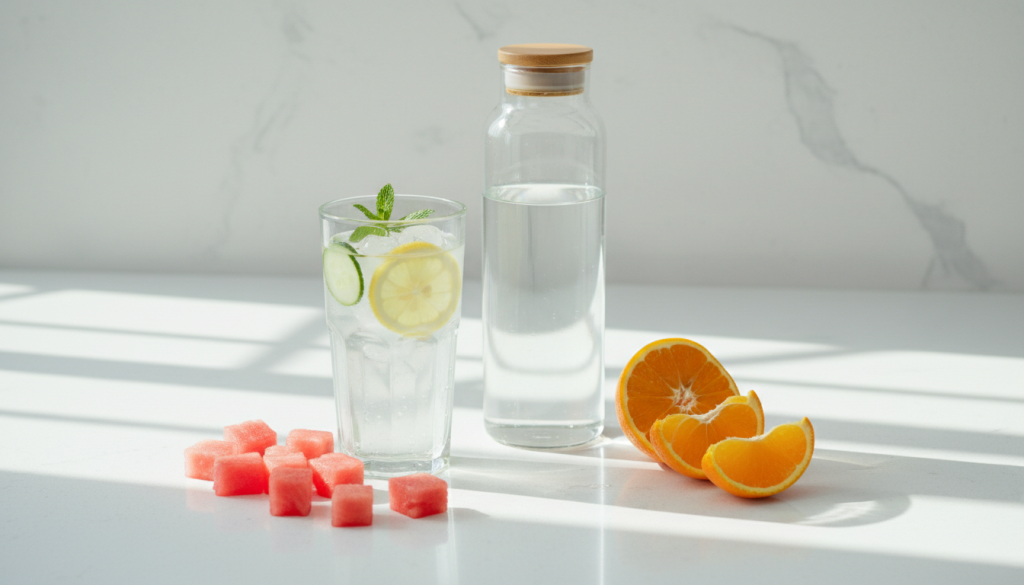
- Flavor water with lemon, cucumber, mint or berries.
- Start the day with a glass of water.
- Eat more fruit and vegetables; they also boost your intake of fiber, which needs fluid to work well.
Staying hydrated also helps prevent constipation and bloating, and can make daily walks feel easier.
Frequently asked questions
How quickly can you rehydrate?
Mild dehydration usually improves within an hour or two of drinking fluids. Oral rehydration solutions work faster than plain water after vomiting or diarrhea.
Can dehydration cause headaches?
Yes. Dehydration is a common headache trigger, and drinking water often relieves it within 30 minutes to a few hours.
Does dehydration raise blood pressure?
Dehydration more often lowers blood pressure and can cause dizziness when standing. Learn what healthy readings look like in our guide to normal blood pressure by age.
Medical disclaimer: This article is for general education only and is not a substitute for personal medical advice. Seek urgent care for signs of severe dehydration, and ask your doctor about fluid needs if you have heart or kidney disease.