Fiber is the nutrient most people are missing. Adults are advised to eat 25–38 grams a day, yet the average intake in many Western countries is closer to 15 grams. Closing that gap is linked to lower cholesterol, steadier blood sugar, easier digestion and a lower risk of heart disease and colon cancer. Below is a practical high-fiber foods list with real serving sizes, plus simple ways to reach your daily target.
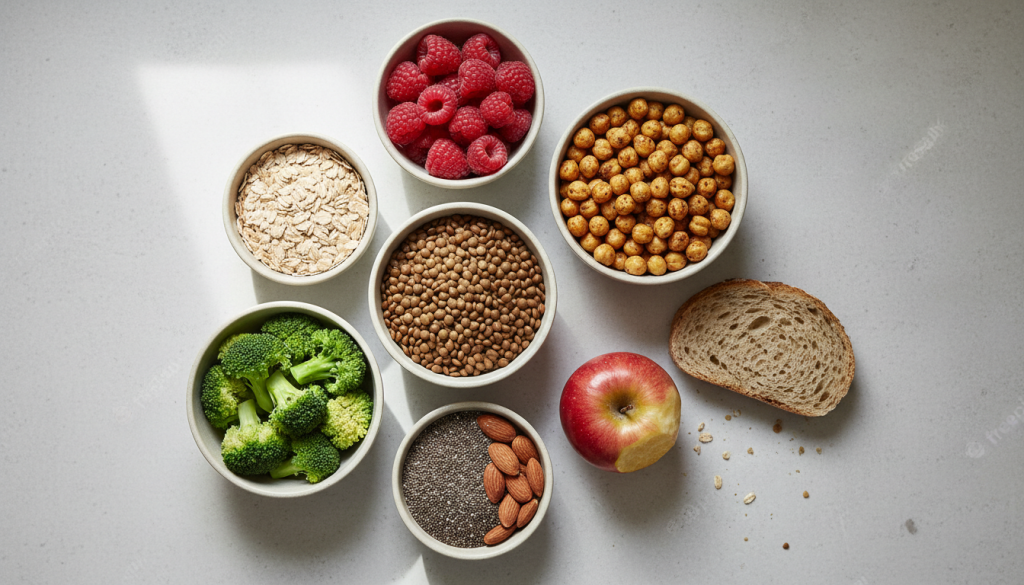
How much fiber do you need per day?
| Group | Daily fiber target |
|---|---|
| Women 19–50 | 25 g |
| Men 19–50 | 38 g |
| Women 51+ | 21 g |
| Men 51+ | 30 g |
Soluble vs. insoluble fiber
- Soluble fiber dissolves in water to form a gel. It slows digestion, helps lower LDL cholesterol and smooths out blood sugar. Found in oats, barley, beans, lentils, apples, citrus and chia seeds.
- Insoluble fiber adds bulk and helps food move through the gut, preventing constipation. Found in wheat bran, whole grains, nuts and vegetable skins.
Most plant foods contain both. Many fibers also act as prebiotics, feeding the beneficial bacteria in your gut microbiome.
High-fiber foods list (grams per serving)
Legumes: the fiber champions
| Food | Serving | Fiber |
|---|---|---|
| Split peas, cooked | 1 cup | 16 g |
| Lentils, cooked | 1 cup | 15.5 g |
| Black beans, cooked | 1 cup | 15 g |
| Chickpeas, cooked | 1 cup | 12.5 g |
| Edamame, shelled | 1 cup | 8 g |
Fruits
| Food | Serving | Fiber |
|---|---|---|
| Avocado | 1 cup, sliced | 10 g |
| Raspberries | 1 cup | 8 g |
| Pear, with skin | 1 medium | 5.5 g |
| Apple, with skin | 1 medium | 4.5 g |
| Banana | 1 medium | 3 g |
Vegetables
| Food | Serving | Fiber |
|---|---|---|
| Artichoke, cooked | 1 medium | 7 g |
| Green peas, cooked | 1 cup | 9 g |
| Broccoli, cooked | 1 cup | 5 g |
| Brussels sprouts, cooked | 1 cup | 4 g |
| Sweet potato, with skin | 1 medium | 4 g |
Whole grains, nuts and seeds
| Food | Serving | Fiber |
|---|---|---|
| Chia seeds | 2 tbsp (1 oz) | 10 g |
| Whole-wheat pasta, cooked | 1 cup | 6 g |
| Quinoa, cooked | 1 cup | 5 g |
| Oatmeal, cooked | 1 cup | 4 g |
| Almonds | 1 oz (about 23) | 3.5 g |
| Popcorn, air-popped | 3 cups | 3.5 g |
Health benefits of a high-fiber diet
- Heart health: soluble fiber binds bile acids and lowers LDL cholesterol. Large reviews link every extra 8 g of daily fiber with a lower risk of heart disease, type 2 diabetes and colorectal cancer.
- Blood sugar control: fiber slows the absorption of carbohydrates, which helps people with prediabetes.
- Weight management: high-fiber meals are filling and less calorie-dense.
- Digestive health: fiber keeps bowel movements regular and feeds healthy gut bacteria.
A sample 30-gram fiber day
- Breakfast: 1 cup oatmeal with 1 tbsp chia seeds and ½ cup raspberries (about 13 g)
- Lunch: lentil soup (1 cup) with a side salad (about 17 g)
- Snack: an apple and a handful of almonds (about 8 g)
- Dinner: salmon with a cup of broccoli and a medium sweet potato (about 9 g)
That totals well over 40 g, which shows how quickly whole foods add up.
How to increase fiber without bloating
- Go slowly: add about 5 g per day each week so your gut bacteria can adapt.
- Drink more water: fiber needs fluid to work well. See our guide on how much water to drink.
- Rinse canned beans to reduce some of the gas-producing sugars.
- Spread fiber across meals rather than eating it all at once.
If you still get gas or discomfort, read our article on how to relieve bloating.
Frequently asked questions
Which food has the most fiber?
Per serving, legumes such as split peas, lentils and black beans are the richest everyday sources, at around 15 g per cooked cup. Chia seeds are the densest by weight.
Are fiber supplements as good as food?
Supplements such as psyllium can help with constipation and cholesterol, but whole foods also provide vitamins, minerals and a wider mix of fiber types. Use supplements to fill gaps, not replace food.
Can you eat too much fiber?
Very high intakes, especially if increased suddenly, can cause gas, cramps and bloating. People with certain bowel conditions may be advised to limit fiber temporarily.
Medical disclaimer: This article is for general education only and is not a substitute for personal medical advice. If you have a digestive condition, talk to your doctor or a registered dietitian before changing your fiber intake.