Lying awake while the clock ticks is frustrating, and it is common: about one in three adults has symptoms of insomnia at some point. A healthy adult usually falls asleep within about 10–20 minutes of lights out. If it regularly takes you much longer, the tips below can help. They are drawn from sleep research and from cognitive behavioral therapy for insomnia (CBT-I), the first-choice treatment recommended by sleep medicine experts.
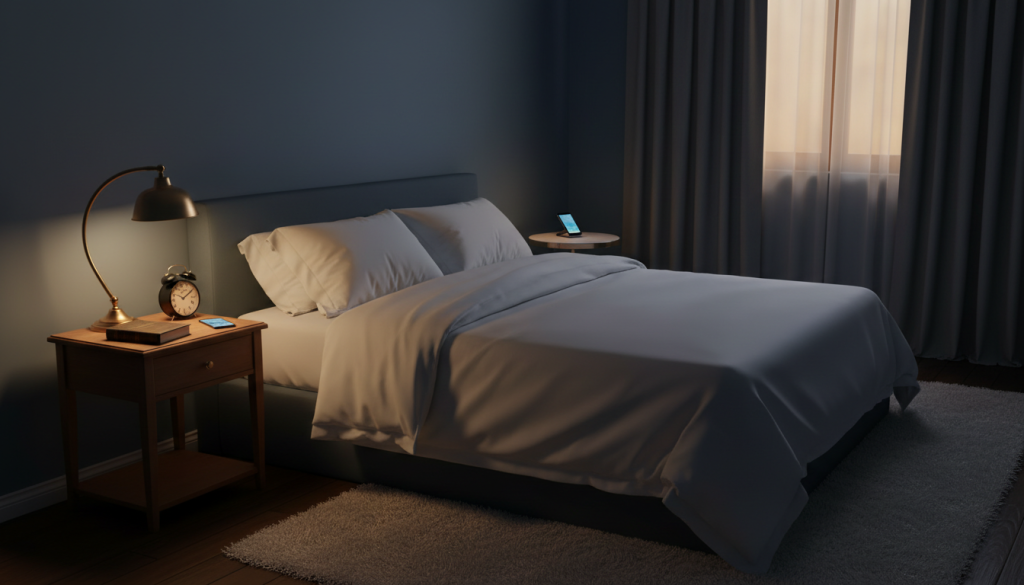
Tonight: techniques to fall asleep fast
1. Slow your breathing
Slow breathing activates the parasympathetic “rest and digest” nervous system. Try the 4-7-8 pattern: breathe in through your nose for 4 counts, hold for 7, then breathe out slowly through your mouth for 8. Repeat four times. Simply making your out-breath longer than your in-breath also works.
2. Use progressive muscle relaxation
Starting with your toes, tense each muscle group for about five seconds, then release for ten seconds, working slowly up to your face. It reduces physical tension and gives a busy mind something neutral to focus on.
3. Try a “cognitive shuffle”
Pick a random word such as “blanket.” For each letter, picture as many unrelated objects as you can starting with that letter: banana, bicycle, bucket… This mimics the scattered thinking of drifting off and crowds out worry.
4. Follow the 20-minute rule
If you have been awake for what feels like 20 minutes, get up, go to another dim room and do something calm such as reading a paper book. Return to bed only when you feel sleepy. This retrains your brain to link bed with sleep, not frustration. Do not check the clock; clock-watching increases anxiety.
5. Write a to-do list
In one study, people who spent five minutes writing tomorrow’s to-do list before bed fell asleep faster than those who wrote about tasks already completed. Getting plans onto paper seems to quiet the mind.
Your evening routine
6. Take a warm shower or bath 1–2 hours before bed
Warm water draws blood to your skin; afterwards your core temperature drops, a natural signal for sleep. A review of studies found that a warm bath or shower 1–2 hours before bed helped people fall asleep faster.
7. Dim the lights and put screens away
Bright light in the evening delays the release of melatonin. Switch to warm, low lighting about an hour before bed. Phones are a double problem: light plus mentally stimulating content. Charge yours outside the bedroom if you can.
8. Keep your bedroom cool, dark and quiet
Most people sleep best at around 16–19°C (60–67°F). Blackout curtains, an eye mask and earplugs or white noise can make a noticeable difference.
Daytime habits that make nights easier
9. Wake up at the same time every day
A fixed wake-up time, including weekends, is the single most powerful way to anchor your body clock. Your bedtime will naturally fall into place.
10. Get morning daylight
Spending 10–30 minutes outdoors in the morning sets your circadian rhythm so you feel sleepy at the right time in the evening. A morning walk combines light with exercise; see our guide to daily walking.
11. Time your caffeine and alcohol
Caffeine has a half-life of around five hours, so an afternoon coffee is still active at bedtime. Try a cutoff of about 8 hours before bed. Alcohol may make you drowsy, but it fragments sleep later in the night.
12. Exercise regularly, but not too late
Regular physical activity improves sleep quality and helps people fall asleep faster. Most people are fine exercising in the evening, but very intense workouts within an hour of bed can make it harder to wind down.
What about sleep supplements?
Melatonin can help with jet lag and shifted body clocks, and low doses often work as well as higher ones. Evidence for magnesium is limited but it may help people who are low in it; read our guide to types of magnesium. Check with a doctor or pharmacist before using any sleep aid, especially if you take other medications, are pregnant or have a health condition.
When to see a doctor
Talk to a doctor if trouble sleeping happens at least three nights a week for three months, affects your daytime functioning, or if you snore loudly, gasp or stop breathing during sleep (possible sleep apnea). Ask about CBT-I, which has lasting results without medication.
Frequently asked questions
How long should it take to fall asleep?
Typically 10–20 minutes. Falling asleep the instant your head hits the pillow can be a sign of sleep deprivation.
Is it bad to nap during the day?
Short naps of 20–30 minutes before mid-afternoon are fine for most people. If you struggle to sleep at night, skip naps for a while.
Does reading in bed help you sleep?
Reading a paper book in dim light is relaxing for many people. If you find yourself wide awake and turning pages, move to another room.
Medical disclaimer: This article is for general education only and is not a substitute for personal medical advice. Persistent insomnia or loud snoring should be evaluated by a doctor.